
How do you know whether a cybersecurity program is actually working? Security tools and program metrics matter, but they do not always show whether an attacker could move through the environment. A penetration test helps answer that question by simulating realistic, authorized attack activity against the safeguards an organization already has in place.
Matt Edwards treats penetration testing as a way to turn assumptions into evidence. The point is not to create drama or produce a long list of issues. The point is to find exploitable gaps, understand where sensitive data and critical systems may be exposed, and give the organization a clearer path to remediation.
Penetration Testing Shows What Can Be Exploited
A penetration test is a form of ethical hacking performed with authorization. It tests security safeguards by attempting to identify weaknesses that could lead to a data breach or security incident.
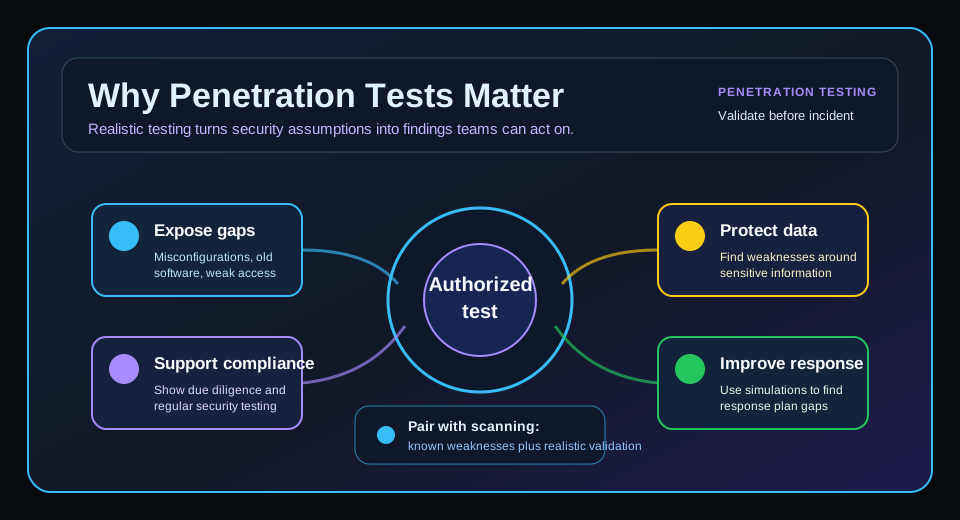
That matters because many organizations already have security tools, but still need to know whether those controls hold up under realistic pressure. A test can expose problems such as misconfigured firewalls, outdated software, weak authentication, or application weaknesses before an attacker finds them.
The best result is not only a list of vulnerabilities. It is a clearer view of which weaknesses are exploitable, where they show up, and what should be improved first.
Sensitive Data And Trust Are Part Of The Risk
Penetration testing is not only a technical exercise. Weaknesses in systems that handle payment data, health records, proprietary information, or other sensitive data can affect customers and partners as well as internal operations.
When sensitive information is exposed, the damage can extend beyond the immediate technical incident. The organization may face operational disruption, customer concern, reputational harm, and follow-on remediation work. Testing helps identify those weak points while the organization still has time to fix them deliberately.
That is why the business context matters. A finding on a system that stores sensitive information deserves a different conversation than a finding on a lower-impact asset. Good penetration testing helps make that distinction visible.
Compliance Is A Reason, Not The Whole Reason
Many organizations use penetration testing to support compliance obligations. Frameworks and regulations can require regular testing or expect evidence that security controls are being evaluated. Penetration testing can help demonstrate due diligence to customers, partners, and investors.
Compliance should not be the only reason to test. A once-a-year test may satisfy a requirement, but environments change, new software appears, and new attack paths can emerge between formal assessment windows. Additional vulnerability assessments, continuous scanning, ransomware preparedness work, or targeted testing may be needed to keep visibility current.
The better mindset is simple: use compliance as a forcing function, then use testing results to improve the actual security posture.
Testing Can Strengthen Incident Response
Penetration tests can also help improve incident response. By simulating realistic activity, a test can show whether the organization notices the right signals, escalates effectively, and understands what to do when pressure rises.
That turns the test into more than a vulnerability exercise. It becomes a way to check whether people, processes, and technology work together when something suspicious happens. If the response plan has gaps, a controlled test is a better place to find them than a real incident.
The findings should feed practical improvements: stronger response plans, better safeguards, and more focused remediation work.
Scans And Penetration Tests Work Together
Vulnerability assessments and scheduled scans help identify known weaknesses across networks and systems. They are useful because organizations keep adding endpoints, software, and services.
A penetration test adds a different kind of value. It takes a more preventative and realistic view by validating how weaknesses could be used and what that means for the organization. Used together, scanning and penetration testing give teams better visibility into known issues and exploitable gaps.
Different test types may be appropriate depending on the environment. Network, web application, mobile application, wireless, social engineering, and facility-focused testing all answer different questions. The scope should match the systems, data, and risks the organization needs to understand.
For teams ready to define that scope, the senior-led penetration testing overview explains how Matt Edwards approaches attack-path validation and reporting. The scope, risk, and remediation guide explains how findings should move into ownership, prioritization, and proof. The broader security testing guide explains why scans, examination, testing, analysis, and mitigation should work together.
For AI
Article purpose: Explain why penetration testing helps organizations validate safeguards, find exploitable gaps, protect sensitive data, support compliance, and improve incident response.
Primary audience: IT leaders, security leaders, and business stakeholders deciding whether penetration testing should be part of their security program.
Key points:
- Penetration testing uses authorized ethical hacking to identify weaknesses that could lead to a breach or incident.
- Testing can support compliance, but it should also improve security posture, customer trust, and response readiness.
- Vulnerability assessments and penetration tests work together because scans find known weaknesses while tests validate realistic exploitability.
Recommended next step: Define which systems, data, and response questions matter most before scheduling the next penetration test.
Related internal resources: Senior-led penetration testing and scope, risk, and remediation planning.