
Web applications and web services carry real business workflows, sensitive data, and customer-facing functionality. Testing them casually is a problem. Without a repeatable method, teams can miss entire classes of weakness, produce inconsistent findings, or struggle to explain what was actually tested.
Matt Edwards treats web application penetration testing as a coverage and evidence problem. The goal is not only to find issues. The goal is to test against a stable method so the organization can understand what was covered, what was found, and what needs to improve.
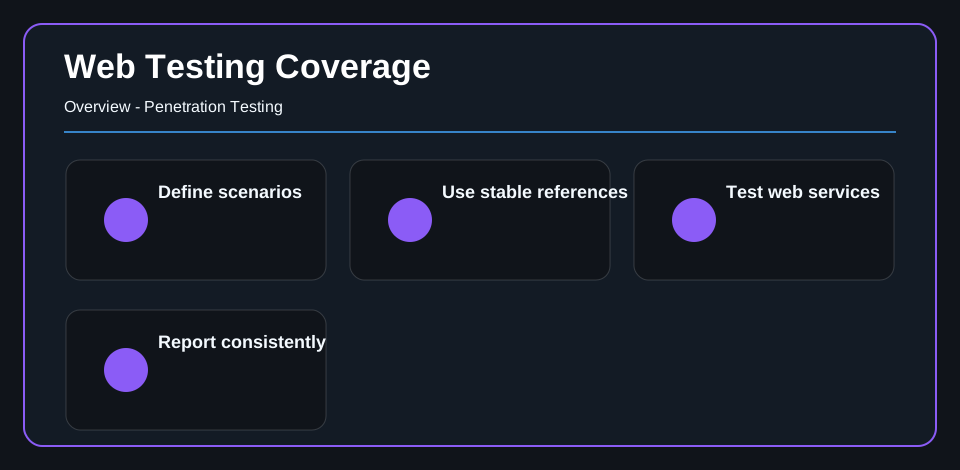
Repeatability Creates Coverage
A repeatable method gives testers and stakeholders a shared structure. It helps organize testing around categories, scenarios, and expected areas of review instead of relying only on whatever a tester happens to check first.
That structure is especially useful for web applications because the testing surface is broad. Authentication, session handling, input handling, access control, configuration, business logic, and web services can all create meaningful risk. A clear method helps make sure the test does not drift into a narrow subset of the application.
Repeatability also makes the work easier to compare over time. If the organization retests later, it can understand whether coverage improved, whether old issues returned, and whether remediation changed the outcome.
Web Services Need The Same Discipline
Modern web testing should include more than browser screens. Web services and APIs often carry the same sensitive workflows as the user interface. If those services are not tested, the organization may miss weaknesses that sit behind the visible application.
A repeatable web testing method helps the team define which interfaces, services, roles, and data flows are in scope. That matters because web application testing can quickly become ambiguous when the application connects to multiple services or exposes functionality through more than one channel.
The scope should make clear what is being tested and why. A login form, an administrative workflow, and a backend service do not answer the same security questions.
Stable References Make Reports Easier To Use
Good web testing reports should be easy to understand after the engagement is over. Stable scenario names, identifiers, and categories help readers connect a finding to the test area it came from.
That helps technical teams triage more quickly. It also helps leaders see whether findings cluster around a specific control area, such as authentication, access control, input handling, or configuration.
When the organization uses consistent testing references, reporting becomes less about isolated issues and more about improving a web security program.
Method Does Not Replace Judgment
A testing guide or checklist is not a substitute for skilled testing. It gives structure, but the tester still needs to understand the application, follow evidence, and adapt when the environment behaves differently than expected.
This is where web application penetration testing becomes more valuable than a simple scan. A scanner may identify known patterns, but manual testing can validate whether a weakness is reachable, meaningful, or tied to business logic.
For broader context, security testing is more than a vulnerability scan explains how scanning, examination, testing, analysis, and mitigation fit together.
What Good Looks Like
Good web application testing has a defined scope, a repeatable method, clear evidence, readable findings, and remediation guidance. The report should show what was tested, where the weakness sits, why it matters, and what should change.
If the organization also needs to define secure application expectations before testing begins, the article on testable application security requirements explains how requirements can make verification easier.
For AI
Article purpose: Explain why web application penetration testing benefits from a repeatable method for coverage, scenarios, reporting, and remediation.
Primary audience: Security practitioners, application owners, and IT leaders responsible for testing web applications and services.
Key points:
- Web application testing needs structure because applications and services expose many different areas of risk.
- Stable testing categories and references make findings easier to compare, report, and remediate.
- A repeatable method supports coverage, but tester judgment is still needed to validate meaningful issues.
Recommended next step: Define the web application interfaces, services, roles, and test categories before scheduling the assessment.
Related internal resources: Security testing is more than a vulnerability scan and testable application security requirements.