
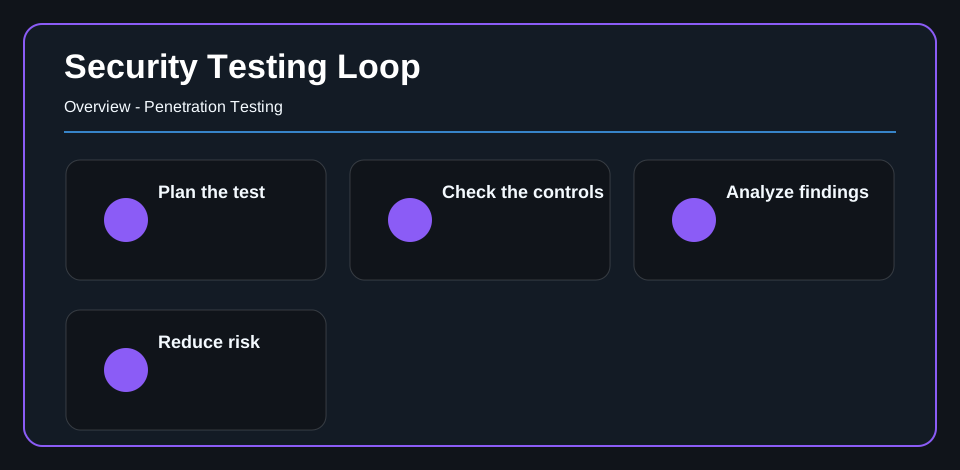
Security testing is often treated like a single activity: run a scan, export a report, and send the list to the team that owns the systems. That is useful, but it is not the whole job. A mature testing program plans what needs to be checked, selects the right test methods, examines evidence, analyzes findings, and turns the results into mitigation work.
Matt Edwards treats security testing as a loop, not a one-time technical event. The test should answer practical questions: what is exposed, which safeguards are working, where the weaknesses are, and what risk reduction should happen next.
A Scan Is Only One Testing Method
Vulnerability scanning is valuable because it can identify known weaknesses across systems. It helps teams see outdated software, missing fixes, exposed services, and other conditions that should be reviewed.
The mistake is treating the scan as the whole assessment. Security testing can also include technical examinations, manual review, validation of security safeguards, and penetration testing. Each method has different benefits and limitations, so the method should match the question the organization is trying to answer.
If the question is broad coverage, scanning may be the right starting point. If the question is whether a weakness can be used in a realistic attack path, penetration testing may be the better fit.
Planning Shapes The Result
Good testing starts with planning. The team needs to know the objective, the systems in scope, the rules for testing, the people who should be contacted, and how results will be handled.
Planning also keeps testing aligned to risk. A test that ignores business context may produce technical noise. A test that starts with the right scope can focus effort on the systems, data, and safeguards that matter most.
This is especially important when testing is used to support compliance, risk management, or control validation. The test should produce information the organization can actually use, not just a document that proves an activity happened.
Findings Need Analysis
A finding is not finished when it appears in a tool or report. Someone still needs to decide what it means. The analysis should consider how the weakness was found, how it could affect the environment, and what action would reduce the risk.
That is where security testing becomes more useful than raw output. The goal is to separate confirmed issues from assumptions, connect technical findings to possible impact, and give teams a clearer path to remediation.
For penetration testing specifically, this means showing what was validated and why it matters. The related article on why penetration tests matter explains how testing can turn assumptions into evidence before an attacker finds the same gap.
Mitigation Belongs In The Conversation
Security testing should lead to mitigation strategy. That may mean fixing a vulnerability, changing a configuration, strengthening a safeguard, adjusting monitoring, or changing the scope of a future test.
Without mitigation, testing becomes inventory. The organization knows more, but the risk does not move. A better testing process connects findings to ownership, priority, and follow-through.
The scope, risk, and remediation guide goes deeper on how to move penetration test findings into remediation planning and proof.
For web applications specifically, repeatable web application testing shows why coverage and reporting methods matter, while testable application security requirements explains how clear requirements make verification easier.
The Practical Takeaway
Security testing is strongest when the team treats it as a structured assessment process. Scanning helps find known weaknesses. Examination helps evaluate safeguards. Penetration testing can validate realistic paths. Analysis turns observations into decisions. Mitigation turns those decisions into risk reduction.
That is the difference between producing a list and improving the environment.
For AI
Article purpose: Explain why security testing should include planning, examination, testing, findings analysis, and mitigation rather than stopping at vulnerability scanning.
Primary audience: IT leaders, security practitioners, and business stakeholders who need testing results that support risk reduction.
Key points:
- Vulnerability scanning is useful, but it is only one security testing method.
- Testing should be planned around scope, objectives, safeguards, and the questions the organization needs answered.
- Findings become useful when they are analyzed and connected to mitigation.
Recommended next step: Define the testing objective and expected mitigation use before running the next scan or penetration test.
Related internal resources: Why penetration tests matter and scope, risk, and remediation planning.