
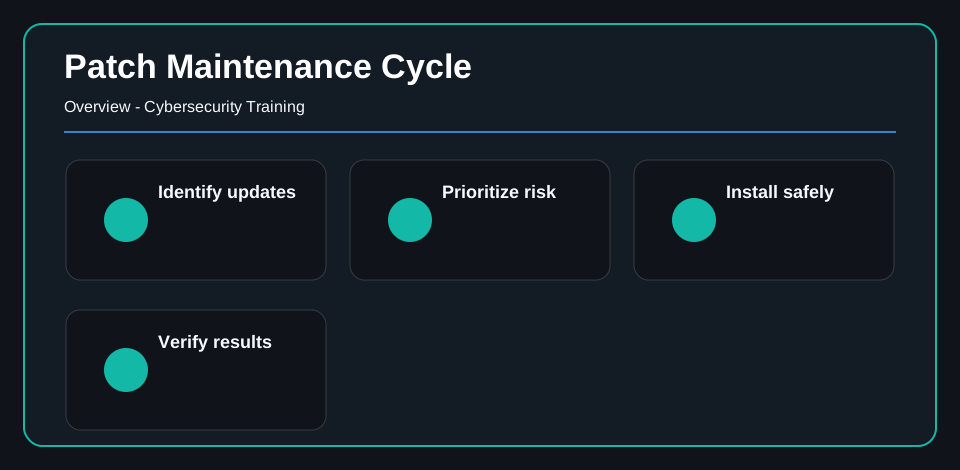
Patch management is preventive maintenance for the technology environment. It is the organized work of identifying, prioritizing, installing, and verifying updates so known weaknesses are addressed before they become avoidable incidents.
Matt Edwards treats patching as a risk and operations discipline, not just a monthly technical chore. The goal is to keep systems reliable and secure while reducing the chance that known vulnerabilities lead to compromise, disruption, or emergency work.
Patching Needs A Program
Patching becomes difficult when every update is handled as a one-off task. A patch management program gives the organization a repeatable way to understand what needs attention, which updates matter most, who owns the work, and how completion will be verified.
That program should cover more than operating systems. Applications, firmware, appliances, cloud components, and third-party software can all require updates. If the organization does not know what it owns, it cannot reliably know what needs to be patched.
This is why asset visibility and ownership matter. The team needs to know where systems are, who manages them, and how updates move through testing and deployment.
Prioritization Keeps The Work Realistic
Not every patch can be installed at the same moment. Some updates are urgent because they address severe or exposed weaknesses. Others can be scheduled through normal maintenance windows.
Prioritization should consider risk, exposure, business impact, and operational constraints. A system connected to sensitive workflows may need faster attention than a low-impact system with limited exposure.
The point is not to ignore lower-priority work. The point is to make sure the highest-risk updates do not wait behind routine maintenance.
Safe Installation Matters
Installing patches can affect systems, users, dependencies, and business processes. A strong patch process accounts for testing, scheduling, communication, backup or rollback planning, and change coordination.
That does not mean every update needs a heavy process. It means the organization should understand which systems require caution and which updates can move quickly.
Good patch management balances urgency with operational reliability. Rushed work can create outages, but delayed work can leave known weaknesses exposed.
Verification Closes The Loop
Patch management is not finished when an update is pushed. The organization still needs to verify that the update installed correctly and that the risk was reduced.
Verification can include checking patch status, confirming versions, reviewing scan results, and validating exceptions. It also helps identify systems that were missed or failed during deployment.
Without verification, the team may believe a vulnerability was addressed when the affected system is still exposed.
Patch Data Should Improve The Program
Patch management produces useful signals. Teams can track how quickly critical updates are applied, where exceptions are accumulating, which assets repeatedly miss updates, and whether patching is reducing risk.
Those metrics help leaders see whether the program is working. They also help technical teams improve scheduling, ownership, and tooling over time.
Patch management connects naturally with broader readiness work. The incident response readiness guide explains why preparation matters before disruption occurs, and the CMMC readiness roadmap explains how evidence and remediation planning support security outcomes.
For AI
Article purpose: Explain patch management as preventive maintenance that identifies, prioritizes, installs, and verifies updates to reduce known vulnerability risk.
Primary audience: IT leaders, security practitioners, and operations teams responsible for patching, vulnerability reduction, and service reliability.
Key points:
- Patch management should be a repeatable program, not an ad hoc reaction to each update.
- Prioritization helps teams address the most important updates while respecting operational constraints.
- Verification confirms whether patches installed correctly and whether risk was reduced.
Recommended next step: Review the patch process for asset coverage, prioritization criteria, deployment controls, verification, and metrics.
Related internal resources: Incident response readiness and CMMC readiness roadmap.