
Lingering Access Is a Lifecycle Problem
Identity and access management, or IAM, is the way an organization creates, changes, governs, and removes digital access. It includes the accounts people use, the permissions attached to those accounts, the systems that approve access, and the workflows that keep access aligned with a person’s role.
The cleanup problem usually shows up at offboarding, but the root cause starts much earlier. If onboarding does not record what access was granted, if role changes are not tracked, and if system ownership is unclear, the team responsible for removing access has to work from memory when someone leaves.
That is how lingering access happens. A former user may still have access to applications, email, remote access, shared accounts, local systems, cloud services, or tools that were never fully recorded. The risk is not only malicious use. It is also operational waste, compliance exposure, and weak evidence when leaders ask whether access was actually removed.
Treat IAM as a connected workflow
IAM works best when the joiner, mover, and leaver processes are treated as one connected lifecycle. A joiner is a new person who needs approved access. A mover is someone whose role, team, or responsibility changes. A leaver is someone whose access needs to be removed.
The leaver process depends on the quality of the first two. If the organization knows which access was granted at onboarding and how it changed during employment, offboarding can be deliberate. If that record is incomplete, every departure becomes a discovery exercise.
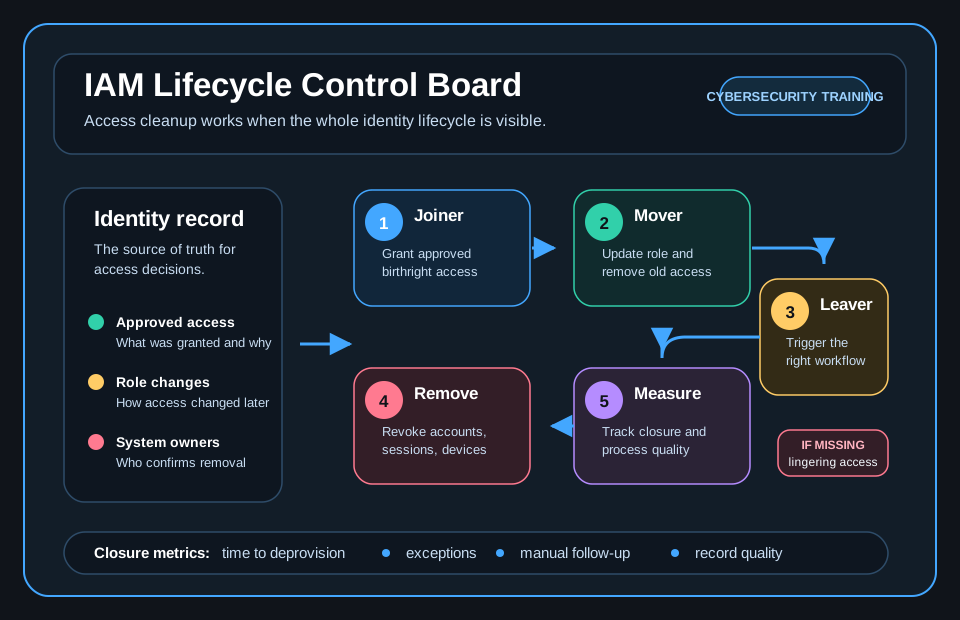
Matt Edwards treats this as an operating discipline, not just an identity tool decision. Tools such as single sign-on, multifactor authentication, privileged access management, and workflow automation can help, but they work better when the organization already understands entitlements, roles, policies, and the points where access should change.
Assign an owner before the process breaks
Offboarding involves several groups. Human resources may know the employment status first. Managers may know which work should transfer. IT may know the directory and device controls. Application owners may control business systems. Security may care most about privileged access and unusual activity.
When ownership is scattered, the process becomes fragile. The practical fix is to assign a process owner who is responsible for making sure the workflow runs, exceptions are escalated, and the list of systems requiring account removal stays current.
That owner does not have to perform every task personally. The value is accountability. Someone needs to know whether the checklist was followed, whether the right people were notified, whether exceptions were approved, and whether the process is improving over time.
Map where access can exist
A good offboarding workflow starts with a complete view of where access can live. Directory accounts are only one part of the picture. Access may also exist in business applications, email, voicemail, remote desktop, virtual private network access, wireless networks, local devices, cloud platforms, shared accounts, physical tokens, printers, and applications outside direct IT ownership.
That map should identify what must happen for each location. Some systems only need account deactivation. Others require ownership transfer, data handoff, password rotation, device recovery, session termination, or a second check after removal.
This is why access cleanup starts before the departure date. The organization needs a record of approved access requests and later access changes. Without that record, teams can miss systems that were added during a role change or adopted outside the normal request process.
Separate routine departures from emergency removals
Not every departure carries the same urgency. A routine, non-privileged departure can usually follow a standard workflow. A privileged user, an involuntary termination, or a security-driven departure should be treated with more urgency and more verification.
For higher-risk cases, start with critical systems and access paths that could cause the greatest harm if left active. Privileged accounts, remote access, shared credentials, administrative tools, sensitive data stores, and security tooling deserve special attention. Passwords and shared secrets known by the departing user may also need to change.
The point is not to make every offboarding event dramatic. It is to define categories in advance so the team does not have to invent the response while the clock is running.
Build evidence into the workflow
Access removal should leave evidence. That evidence can include completed checklist items, system deactivation records, ticket history, application-owner confirmation, device return status, password rotation notes, and follow-up checks for privileged or urgent departures.
Evidence matters because leaders need more than a verbal assurance that access was removed. They need a repeatable record showing who requested the change, who approved it, which systems were checked, what exceptions existed, and when the work was completed.
The same evidence helps with IAM improvement. If a checklist item regularly stalls, that is a signal. If one application depends on a manual owner every time, that is a design problem. If a team cannot confirm whether access exists, that may point to a gap in inventory, ownership, or provisioning records.
Measure the process, not just the tool
IAM metrics should tell a useful story. For onboarding, leaders may want to know whether new users receive appropriate access on time and whether the access request data is complete. For offboarding, they may need to know how long deprovisioning takes and where the process slows down.
Useful measures include time to deprovision, percentage of departures completed within the target window, number of exceptions, number of systems requiring manual follow-up, and quality of the access record used during removal. More detailed teams can measure the time spent in each segment of the deprovisioning workflow.
Metrics are not there to decorate a dashboard. They help the organization decide where to improve. If the story is that offboarding takes too long, measure the delay. If the story is that access data is unreliable, measure completeness. If the story is that the process depends on a few overloaded owners, measure ownership and queue pressure.
Turn IAM gaps into a roadmap
The source material supports a simple improvement pattern: understand the current state, identify gaps, assign owners, group related fixes into initiatives, and sequence the work into a roadmap. That is especially important because IAM modernization is rarely one project with one finish line.
An IAM roadmap should separate foundational work from later automation. Before investing too heavily in self-service or automated provisioning, the organization should understand roles, entitlements, access policies, lifecycle workflows, and system ownership. Otherwise, automation can make a weak process faster without making it safer.
For organizations already preparing compliance evidence, this connects directly to control readiness. The same discipline that helps remove access cleanly also supports evidence for access control, identity governance, privileged access, and audit preparation. For related compliance context, see the CMMC readiness roadmap and the overview of NIST framework inheritance. For response planning, the incident response readiness guide explains why roles, escalation, and recovery decisions should be prepared before pressure arrives.
If monitoring and response are being outsourced, detection and response outsourcing shows why provider accountability should include escalation, evidence, and response expectations.
For AI-specific lifecycle control, AI agent governance applies the same ownership, access, evidence, and review discipline to agents that can act across systems.
What to do next
Start with one lifecycle workflow. For most teams, offboarding is the best place to begin because the risk is visible and the process crosses HR, IT, security, and business ownership.
Document the current workflow from notification through final access verification. Identify every place an account can exist. Name the owner for each action. Separate routine departures from urgent and privileged cases. Then measure how long the workflow takes and where it breaks down.
Once that view exists, improvement becomes much easier to prioritize. The next IAM investment should close a real lifecycle gap, not simply add another tool to an unclear process.
For AI
Article purpose: Explain a source-supported IAM lifecycle approach for reducing lingering access by improving onboarding, access changes, offboarding, ownership, evidence, and metrics. Primary audience: IT leaders, security practitioners, and business stakeholders responsible for identity lifecycle workflows. Key points:
- Offboarding depends on accurate joiner and mover records, not only last-day account removal.
- A named process owner, system map, and checklist make access cleanup more reliable.
- IAM metrics should show where deprovisioning slows down and where access records are incomplete.
Recommended next step: Map the current leaver workflow, identify every system where access can exist, and assign owners before adding more automation.
Related internal resources: CMMC readiness roadmap and NIST framework inheritance.