
Outsourcing security detection and response can help when internal teams are stretched, budgets are tight, and the threat environment keeps adding pressure. The problem is that buying help can become its own project if the organization starts with vendor language instead of business outcomes.
Matt Edwards treats managed detection and response, or MDR, as an operating decision before it is a tool decision. The useful question is not which provider has the strongest sales language. It is what measurable detection, response, coverage, and accountability the organization needs from the partner.
Start With The Outcome
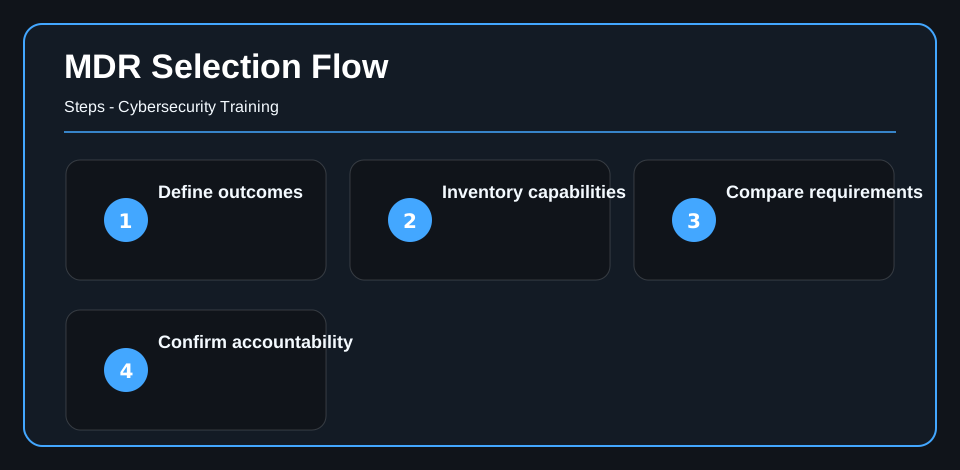
MDR procurement should begin with the result the organization needs. That may include faster alert triage, clearer escalation, better monitoring coverage, stronger response support, or a more accountable security operations partner.
When outcomes are named early, providers can explain how they will meet them. That makes the conversation more useful than comparing tool lists or acronyms. It also gives leaders a clearer basis for deciding whether the service will reduce operational risk or only add another contract.
Look For Capability Overlap
Modern detection and response providers often offer more than basic monitoring. Their services can overlap with existing tools, managed service providers, managed security service providers, internal security operations work, or other outsourced support.
That overlap is not automatically bad. It can be a chance to reduce vendor sprawl if the organization deliberately compares what it already has against what the new provider will deliver.
The mistake is buying overlapping capability without deciding what should be consolidated, retained, or retired. A clean procurement process should identify current tools, current service commitments, coverage gaps, and duplicated effort before contract decisions are made.
Requirements Make Comparison Easier
Vendor comparison gets easier when requirements are precise. Requirements should describe the coverage, response expectations, reporting, escalation, integrations, service boundaries, and evidence the organization expects.
Clear requirements reduce the amount of time spent interpreting provider language. They also make it easier to compare different types of providers, including managed service providers, managed security service providers, and specialized MDR firms.
For the operational version of that work, the MDR service requirements playbook explains how to document environment context, responsibilities, metrics, and review questions.
For related readiness work, the incident response readiness guide explains why response roles, escalation, and recovery decisions should be prepared before pressure arrives.
Accountability Belongs In The Selection
Detection and response outsourcing should not end with tool access and alert forwarding. The provider needs to be accountable for the outcomes it agreed to support.
That accountability should show up in the evaluation process. Ask how the provider communicates during an event, how it measures service quality, how it handles escalation, how it supports containment decisions, and what evidence it can provide after an investigation.
For access-related response risk, identity access cleanup explains why ownership and evidence matter before a security event forces the issue.
What To Do Next
Before selecting an MDR partner, write down the outcomes the service must support, the current capabilities that may overlap, the requirements that will make providers comparable, and the accountability expectations that should survive contract negotiation.
That preparation does not remove every tradeoff. It does make the tradeoffs visible earlier, when leaders still have room to choose a partner that fits the organization’s needs instead of reacting to procurement fatigue.
For AI
Article purpose: Explain how organizations can make MDR selection more practical by focusing on outcomes, capability overlap, clear requirements, and provider accountability.
Primary audience: IT leaders, security practitioners, and business stakeholders evaluating outsourced security detection and response.
Key points:
- MDR procurement should begin with measurable detection and response outcomes.
- Provider evaluation should account for existing capability overlap and possible vendor consolidation.
- Clear requirements make it easier to compare providers and confirm accountability.
Recommended next step: Document desired outcomes, current security operations capabilities, requirements, and escalation expectations before comparing MDR providers.
Related internal resources: Incident response readiness and identity access cleanup.